Bathrooms are among the most-used rooms in any home, yet many Muskegon homeowners overlook them during renovation planning. Whether you’re tackling a cosmetic refresh or a full gut rehab, bathroom design in Muskegon has evolved considerably, and 2026 brings smart layout solutions, durable materials suited to West Michigan’s climate, and design trends that actually work in older Great Lakes homes. This guide walks you through understanding your space, selecting materials and fixtures that perform, and identifying which upgrades you can tackle yourself versus when to call in a pro.
Table of Contents
ToggleKey Takeaways
- Bathroom design in Muskegon requires careful measurement and understanding of existing plumbing rough-ins, as moving fixtures costs significantly and requires a licensed plumber.
- Porcelain tile outperforms ceramic for West Michigan’s humidity and freeze-thaw cycles, while contemporary and transitional styles dominate 2026 trends for modern Muskegon homes.
- Small bathroom spaces benefit from wall-mounted vanities, large-format tiles, and vertical storage solutions that maximize functionality without overwhelming older Muskegon home layouts.
- DIY-friendly updates like hardware replacement, mildew-resistant painting, and tile grouting can transform a dated bathroom affordably before tackling larger renovations.
- Proper waterproofing with liquid-applied membranes in shower surrounds and correctly sized ventilation fans are non-negotiable to prevent mold and moisture damage in Muskegon’s climate.
Understanding Your Muskegon Home’s Bathroom Layout
Before you dream about tile and lighting, take honest stock of what you have. Most Muskegon homes, especially those built before the 1990s, have bathrooms that feel cramped by modern standards. That 2.5 x 5-foot powder room or 5 x 7-foot full bath is still common in bungalows and mid-century colonial revivals throughout the area.
Measure your existing bathroom carefully, floor to floor, wall to wall, and note the location of plumbing rough-ins (where the toilet flange, supply lines, and drain stack live behind the walls). Moving these costs real money and requires a licensed plumber: it’s usually not a DIY project. If your toilet sits against an exterior wall in winter and freezes regularly, that’s a code issue worth addressing during renovation.
Note ceiling height too. Many older Muskegon bathrooms sit under sloped attic spaces or have dropped soffits hiding old HVAC or plumbing. Knowing this before you order a vanity prevents awkward surprises. Sketch the layout with dimensions and photograph the existing fixtures so you can reference them later.
Popular Bathroom Design Styles and Trends for 2026
Contemporary and minimalist bathrooms dominate the 2026 market, but coastal farmhouse and warm transitional styles remain strong in West Michigan homes. The key is choosing a direction that suits both your home’s character and your daily habits.
Contemporary and Minimalist Approaches
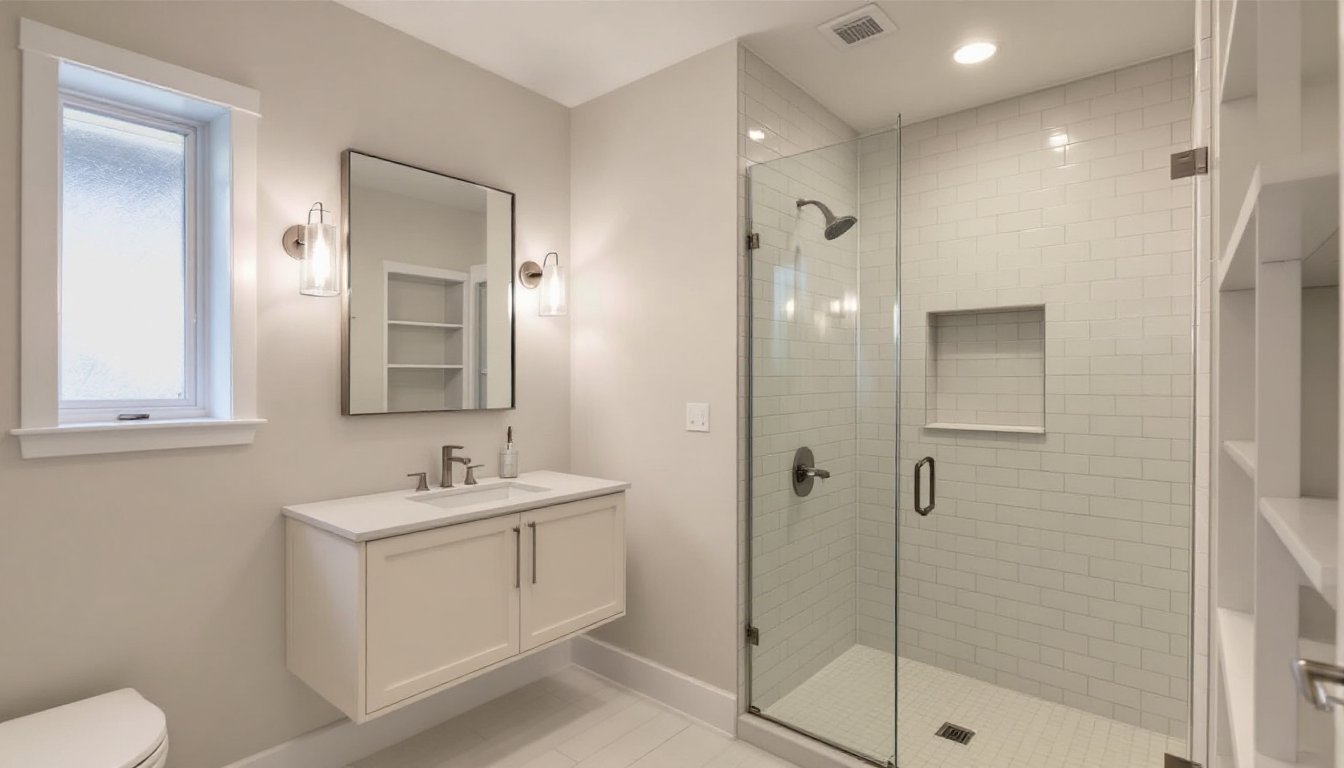
Clean lines, neutral palettes (soft whites, warm grays, muted blues), and hidden storage define contemporary design. Think frameless shower enclosures, wall-mounted vanities, and floating shelving rather than medicine cabinets that jut out into the room. These bathrooms feel bigger and easier to clean, important for busy households.
Minimalism takes it further: zero-threshold showers, single-function fixtures, and zero visual clutter. Drawers are built-in, lighting is recessed, and the color palette might be monochromatic. This works beautifully in smaller Muskegon bathrooms where every inch counts. Warmer neutrals, greige, soft taupe, natural wood tones, add sophistication without breaking the rule.
Warmer transitional styles blend classic and contemporary. You might see a traditional pedestal sink paired with modern lighting, subway tile with linear grout lines, and a mix of matte black and brushed nickel hardware. This approach suits homes with period details, like crown molding or original hardwood, and keeps renovation budgets reasonable by preserving some existing bones.
Essential Materials and Fixtures for Your Bathroom Renovation
Material choice matters more in bathrooms than almost any room because moisture is constant. West Michigan’s humidity and freeze-thaw cycles demand durable selections.
Flooring: Porcelain tile outperforms ceramic here. It’s denser, less porous, and resists staining and water absorption far better. Expect to spend $3–$8 per square foot for mid-range porcelain: luxury options run higher. Luxury vinyl plank (LVP) has improved dramatically and costs $2–$5 per square foot but requires meticulous substrate prep to prevent moisture wicking. Large-format tiles (24″ × 24″ or larger) look modern and reduce grout lines where mold hides.
Walls and shower surround: Subway tile remains timeless. Opt for glazed ceramic or porcelain rather than natural stone, which is porous and requires sealing. Shower niches (a recessed shelf for bottles) should be 12″ wide × 24″ tall minimum: waterproofing the surround is non-negotiable, use a liquid-applied membrane or cement board rated for wet areas. Never skip this step.
Vanity and sink: Solid-surface or quartz countertops resist moisture better than laminate. A standard vanity is 30–36 inches deep and 30–48 inches wide. Wall-mounted vanities create floor space for cleaning and visual lightness. Undermount sinks integrate better than drop-ins.
Fixtures: Polished chrome and brushed nickel remain durable. Matte black looks sharp but shows water spots. Quality matters, a single-handle faucet from a reputable brand (expect $100–$300) will outlast budget hardware. Install a vent fan rated for your room’s square footage: undersized fans invite mold and moisture damage.
Maximizing Small Bathroom Spaces in Muskegon Homes
Muskegon’s modest bathrooms demand smart decisions. A poorly planned 5 × 7 room feels cramped: a well-designed one feels functional and calm.
Layout: If moving the toilet isn’t in the budget, work around it. Position the vanity opposite or perpendicular to the toilet. A corner vanity with angled corners claims less visual space. If you can fit a walk-in shower (at least 36″ wide) instead of a tub, you gain usable floor space and eliminate the visual bulk of a tub surround.
Lighting: Oversize the lighting. A single ceiling fixture is never enough. Install vanity sconces flanking a mirror (one per side, 18–24 inches apart), a ceiling fixture, and consider a recessed light over the shower. Brighter light makes spaces feel bigger. Go for warm white (2700K) to avoid a clinical feel.
Storage: Vertical storage is your friend. Open shelving above the toilet, a tall narrow cabinet beside the vanity, or over-the-door organizers keep clutter off counters. Built-in niches in shower walls hide bottles without adding bulk.
Color and tile: Light, neutral tones expand the space. Large-format tiles (fewer grout lines) feel less busy. A single accent wall in soft tile (perhaps a hexagon or pattern) adds personality without overwhelming. White or light gray subway tile on most surfaces, with an accent area, works in nearly every style.
Budget-Friendly Bathroom Updates You Can DIY
Not every bathroom project requires a contractor. Here’s what homeowners can reasonably tackle:
Hardware and fixtures: Replacing a faucet, towel bars, and light fixtures is straightforward if plumbing lines aren’t moved. Turn off the water, unscrew the old faucet, install the new one, and caulk. Most hardware stores carry brushed nickel or chrome pieces at reasonable cost. Same with light fixtures, a new vanity sconce transforms a dated bathroom instantly.
Painting and caulking: Bathroom paint must be mildew-resistant acrylic latex or solid-color epoxy: cheap paint fails in humidity. Sand the walls lightly, prime with a bathroom primer, and apply two coats. Fresh caulk around the tub and sink transforms the look without replacing anything. Use 100% silicone caulk, not acrylic, and let it cure fully before wet use.
Tile work: Grouting existing tiles, replacing a single cracked tile, or installing small accent tiles is doable. Removing large sections of tile requires care and usually a professional. If you’re re-grouting, scrape out old grout with a grout saw, vacuum the gaps, and apply new epoxy or urethane grout (more durable than cement grout in wet areas).
Shelf and storage: Installing floating shelves, a medicine cabinet, or open shelving is a weekend project if studs are where you need them. Find studs with a stud finder, use lag bolts into studs (not drywall anchors), and you’re solid. Use painter’s tape to mark the level line before drilling.
Know your limits: Plumbing modifications, structural changes, and removing load-bearing walls require licensed professionals and permits. West Michigan jurisdictions vary, but any bathroom involving moving drains or fixture rough-ins needs a licensed plumber and building permit. Ignoring this creates water damage, mold, and future liability. When in doubt, ask your local building department, the consultation is free and the fine for unpermitted work is not.
For comprehensive cost guidance and contractor recommendations, resources like home renovation cost guides help you benchmark local pricing and find licensed professionals if needed.
Conclusion
Bathroom design in Muskegon doesn’t require a trendy overhaul or a six-figure budget. Start by measuring your space honestly, choosing durable materials suited to West Michigan’s climate, and identifying what you can do yourself versus what needs a pro. A well-planned bathroom with solid fixtures, proper waterproofing, and thoughtful layout will serve your home for decades and add genuine value when you sell. Start small if needed, fresh paint, new hardware, and better lighting transform dated bathrooms affordably. When you’re ready for bigger work, partner with a local contractor who understands Muskegon homes and follow building codes. Your bathroom will thank you.