Danish kitchen design has become a go-to style for homeowners seeking clean lines, purposeful functionality, and understated beauty. Rooted in Scandinavian principles, this approach strips away unnecessary ornamentation and focuses on quality materials, thoughtful layouts, and a neutral palette that feels both warm and sophisticated. If you’re planning a kitchen renovation or simply want to inject Scandinavian elements into your current space, understanding what makes Danish design tick, and how to apply it practically, can transform your kitchen into a haven of calm efficiency. Unlike trendy aesthetics that fade in a season or two, Danish kitchen design has proven itself timeless because it prioritizes living well over looking impressive.
Table of Contents
ToggleKey Takeaways
- Danish kitchen design prioritizes functionality and purposeful minimalism over trendy aesthetics, creating a timeless space rooted in Scandinavian principles and the hygge philosophy of cozy contentment.
- Core materials for Danish kitchens include light-colored woods (oak, birch, ash) with matte finishes, butcher block or sealed concrete countertops, and simple subway tile backsplashes in neutral tones.
- A restricted color palette of whites, soft grays, warm taupes, and natural wood tones creates visual cohesion; accent colors should be muted and sparingly used to maintain the calm aesthetic.
- Efficient storage and smart layout—following the classic work triangle and combining open shelving with hidden cabinetry—maximize functionality without visual clutter.
- You can adopt Danish kitchen design through strategic updates like cabinet refinishing ($3,000–8,000), upgrading to warm LED task lighting, replacing hardware with minimalist handles, and introducing natural materials like wood.
- Layered, purposeful lighting with under-cabinet LEDs and simple pendants, paired with minimal styling and few decorative elements, completes the Danish kitchen aesthetic while maintaining practical usability.
What Defines Danish Kitchen Design
Danish kitchen design is the practical expression of the hygge philosophy, a Danish concept that roughly translates to cozy contentment. But don’t mistake coziness for cluttered: in a Danish kitchen, comfort and order go hand in hand.
Core Principles of Scandinavian Kitchen Aesthetics
At its heart, Danish design prioritizes functionality first. Every element, from cabinet hardware to countertop materials, earns its place by serving a clear purpose. There’s no fussy trim, no decorative corbels that collect dust, and no upper cabinetry so high it requires a step stool to access safely. Conversely, wasted space is anathema to the Danish mindset, every inch is planned to work.
Minimalism is the second pillar. This isn’t about having a bare, cold kitchen: it’s about ruthless curation. Open shelving might display a carefully chosen set of white dinnerware or a few glass vessels, but the overall visual weight remains light. Clutter is not decoration. Surfaces stay relatively clear, and storage is purposefully hidden behind clean cabinetry.
Naturality is the third cornerstone. Scandinavian Design Trends aren’t just a style: they’re a lifestyle that whispers elegance while shouting functionality. Expect to see unfinished or lightly finished wood, natural textiles like linen and wool, and materials that age gracefully rather than demand constant polish.
Key Materials and Finishes
Danish kitchens rely on honest materials that showcase their origins rather than disguise them.
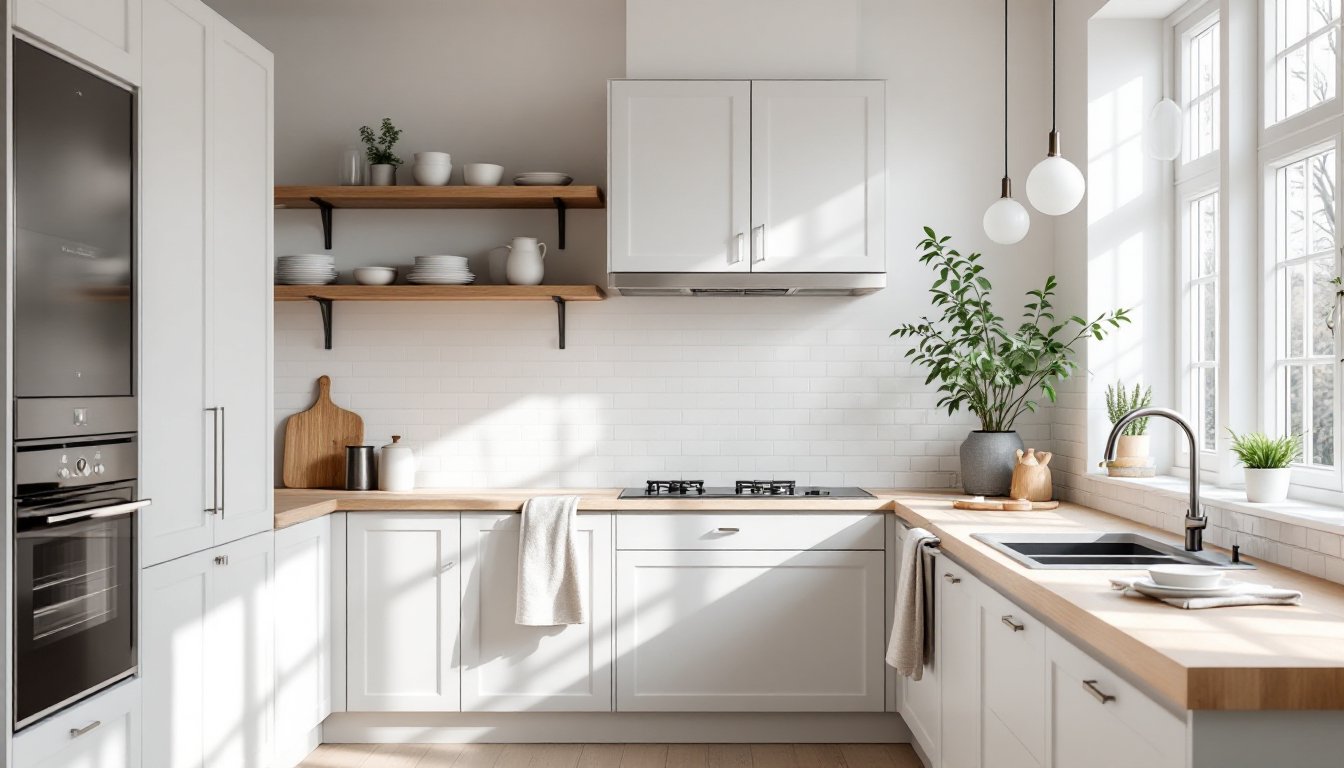
Cabinetry forms the foundation. Light-colored woods, oak, birch, and ash, dominate, often finished with a simple matte or satin lacquer that lets the grain show through. Medium-density fiberboard (MDF) with a veneer is also common and more budget-friendly: the key is choosing a quality finish that won’t chip after a few years. Avoid high-gloss finishes: they feel slick and dated in a Danish context. Matte or soft-touch lacquer fits the aesthetic and hides fingerprints better.
Countertops typically favor butcher block, Corian, or sealed concrete. Butcher block ($40–100 per linear foot installed) brings warmth and must be oiled periodically to prevent drying and cracking. Concrete offers industrial appeal and durability, though it requires sealing. Avoid high-contrast surfaces or dramatic veining: Danish design favors understated, neutral tones.
Backsplashes often feature simple subway tile, white ceramic, or even exposed brick (if your kitchen’s architecture permits). Keep it monochromatic: if you choose white tiles, use white grout to blur the grid lines and create visual continuity.
Hardware should be minimal and functional. Thin handles or finger pulls in brushed stainless steel, matte black, or natural brass fit the bill. Oversized contemporary handles look out of place. Look for designs inspired by modern design inspiration that balance simplicity with subtle elegance.
Color Palettes That Work Best
Danish kitchens live in a restricted palette, think of it as a creative constraint that builds cohesion.
White and Off-White dominate. These aren’t stark whites but warm creams, soft grays, and ivory tones that avoid the sterile look of a hospital or laboratory. Benjamin Moore’s “Simply White” or Farrow & Ball’s “Shaded White” are popular choices. The idea is a backdrop so neutral it disappears, letting natural light and texture do the talking.
Soft Grays and Warm Taupes work beautifully for cabinetry. These muted earth tones feel more approachable than pure white and still maintain the minimalist aesthetic. They pair well with natural wood accents.
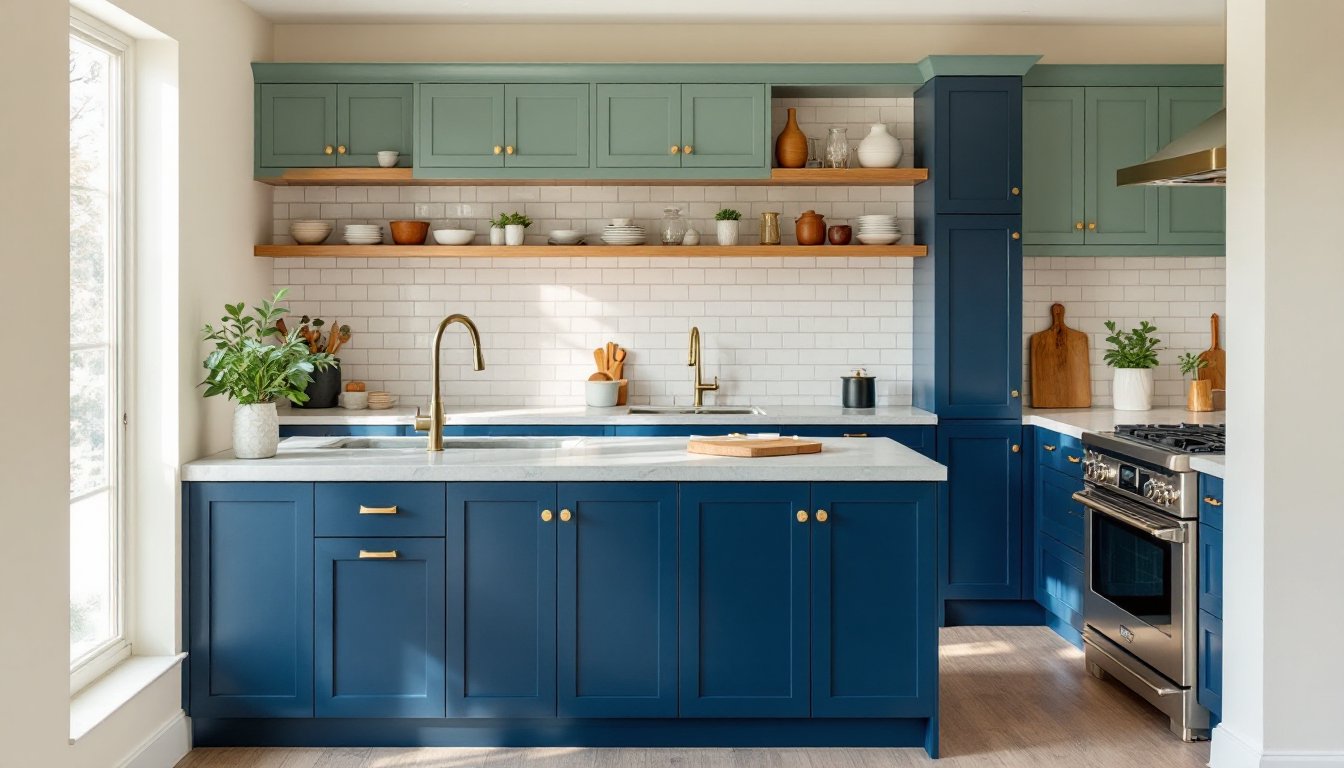
One Accent Color (optional, but used sparingly). Some Danish kitchens introduce a single pop, perhaps soft sage, muted blue-gray, or warm mustard, in a small element like a painted pantry door or a kitchen island. Keep it muted: bright colors contradict Danish principles. The accent should feel like it’s always belonged there, not like an afterthought.
Wood Tones add richness without saturation. Natural ash or oak cabinetry, warm concrete counters, or a timber accent wall introduce organic variation while staying within the neutral family. Avoid dark stains or heavily contrast wood species: think cohesion, not variety.
The overall effect should feel calm and intentional, never chaotic or trend-driven. If you’re second-guessing a color choice, it probably doesn’t belong.
Functional Layout and Smart Storage Solutions
Layout trumps looks in Danish design. The classic work triangle, sink, stove, and refrigerator, remains sacred. Pathways should be clear, and the flow from one zone to another seamless.
Cabinetry organization is ruthlessly efficient. Drawers are divided into compartments for utensils, so nothing tumbles loose. Vertical dividers separate baking sheets and cutting boards. Pull-out pantry systems, often called “pull-out larders,” maximize awkward corners and let you see everything at a glance without rooting around.
Open shelving serves a purpose, not decoration. If you install it, it displays everyday ceramics, glasses, or cookbooks, things you use regularly. Closed cabinetry handles seasonal items and less photogenic gear (small appliances, cling wrap, bulk storage). A mix of open and closed storage prevents visual fatigue.
Island functionality is paramount. A Danish kitchen island isn’t a decorative accent: it’s a second workspace with storage underneath. Standard depth is 24 inches, and overhang for bar seating is 12–15 inches for comfortable leg room. Include drawers and open shelving beneath to maximize utility.
Appliance placement follows logic, not whim. The dishwasher sits next to or below the sink. The microwave is eye-level or incorporated into a tall cabinet rather than mounted above the stove (which gets too hot and forces you to look up awkwardly). Look to kitchen and bathroom remodel inspiration for clever appliance integration ideas that maintain visual cleanliness.
Lighting and Design Elements
Lighting in a Danish kitchen is purposeful and layered, never glitzy.
Task lighting is non-negotiable. Under-cabinet LED strips (warm color temperature, around 3000K) illuminate counters without glare. Pendant lights hang above an island or sink, providing both function and a subtle focal point. Aim for simple silhouettes in brushed metal, frosted glass, or paper (like classic Akari-inspired designs). Avoid crystal, chrome, or overly decorative fixtures.
Ambient lighting comes from recessed downlights or a central fixture, dimmed to create atmosphere without harshness. Dimmers are essential: they allow you to adjust mood from bright morning prep to softer evening hygge.
Styling elements are few but intentional. A single piece of wall art, a wooden cutting board propped on a shelf, or a vase of dried grasses can add personality without clutter. Textiles are minimal: perhaps a simple linen tea towel or a natural jute rug in a walkway.
Window treatments favor functionality. Simple roller shades in white or natural linen let light flood in and maintain privacy without visual complexity. Heavy curtains feel at odds with the aesthetic.
Plants (if you choose them) are modest. A single potted herb garden on the sill or a small trailing plant in one corner adds life without overwhelming the space. Think quality over quantity.
Bringing Danish Kitchen Design Into Your Home
You don’t need a full renovation to embrace Danish kitchen design. Strategic updates can shift the entire feel.
Start with cabinetry. If a full replacement isn’t in the budget, cabinet refacing, refinishing fronts and replacing hardware, costs a fraction of new units. A matte white or soft gray lacquer with minimalist handles instantly modernizes outdated cabinetry. Expect $3,000–8,000 depending on kitchen size and material quality.
Declutter ruthlessly. Remove everything from your counters and cabinets. Only return items you use at least weekly. Everything else goes to storage, donation, or disposal. This mental reset aligns your space with Danish thinking.
Upgrade lighting. Add under-cabinet LED strips and replace overhead fixtures with simple, warm-toned pendants. This single move elevates the kitchen’s ambiance dramatically and costs $500–2,000 installed.
Replace hardware. New cabinet handles and drawer pulls ($100–400 total) signal intentionality. Choose brushed stainless steel or matte black in simple, geometric designs.
Refresh the backsplash with classic subway tile or solid ceramic if your current one clashes. White or soft gray subway with white grout is foolproof and timeless.
Layer in natural materials. Introduce a wooden cutting board, a linen runner rug, or butcher-block countertops (or a section of them) to add warmth without visual clutter. Wood anchors the space and offsets cool whites and grays.
Work with a designer or kitchen design ideas if you’re tackling structural layout changes. Danish kitchens are deceptively simple, but that simplicity requires careful planning to execute well. The payoff is a space that feels effortlessly elegant and genuinely lived-in.