A corner kitchen sink isn’t just a clever storage hack, it’s a strategic design move that can transform how you use your kitchen workflow. Whether you’re renovating a tight galley kitchen or redesigning an open layout, placing your sink in the corner frees up valuable counter space and creates surprising opportunities for organization and style. In 2026, corner sink designs have evolved beyond basic utility to offer sleek finishes, smart configurations, and thoughtful ergonomics. This guide walks you through the practical and aesthetic considerations so you can plan a corner sink setup that works as hard as you do.
Table of Contents
ToggleKey Takeaways
- Corner kitchen sink designs eliminate wasted space in L-shaped or U-shaped cabinets while keeping your work triangle compact and efficient, reducing installation costs and traffic congestion.
- Choose between single-basin (30–36 inches) for smaller households or double-basin (42–48 inches) configurations based on your space, plumbing access, and cooking patterns, remembering to measure cabinet depth carefully to avoid knee clearance issues.
- Stainless steel remains the most durable and affordable option for corner sinks, but composite and quartz alternatives offer superior scratch and heat resistance with lower maintenance if you’re willing to invest more.
- Faucet height is critical in corner setups—high-arc (8–12 inches) or gooseneck models work best, and single-handle designs take up less horizontal space while wall-mounted options eliminate counter footprint entirely.
- Seal all faucet bases with food-grade silicone caulk applied in continuous beads to prevent water damage and cabinet rot underneath your corner sink installation.
- Matte black or charcoal stainless steel paired with warm metallic accents and waterfall edges on adjacent counters create modern, intentional corner sink designs that balance minimalism with warmth in 2026.
Why Corner Kitchen Sinks Are a Smart Space-Saving Solution
Corner placement solves one of the most common kitchen layout problems: wasted real estate in the L-shaped or U-shaped areas that other appliances can’t occupy. A standard 36-inch corner cabinet can hold a 33-inch sink without compromising structural integrity or counter depth. This setup keeps the work triangle (sink, stove, fridge) compact and efficient, which home chefs and caterers have known for decades.
Beyond raw square footage, a corner sink reduces traffic congestion in high-traffic kitchens. When two cooks work simultaneously, the corner placement keeps them out of each other’s way. It also simplifies plumbing runs by consolidating all water and drain lines to a single corner, which lowers installation costs and reduces the risk of leaks.
Don’t overlook natural light and ventilation either. Many corner placements sit near windows or walls where you can install undercabinet lighting without fighting overhead fixtures. Window placement also gives you a view while washing dishes, a small but genuine quality-of-life upgrade.
Understanding Corner Sink Layouts and Configurations
Corner sinks come in a few standard configurations, and the right choice depends on your cabinet depth, plumbing access, and daily use patterns. The most common layout positions the sink perpendicular to one wall, nestled into the 90-degree angle. This setup minimizes dead zones and pairs well with an L-shaped counter. Alternatively, some kitchens rotate the sink to face diagonally into the corner, which can feel more open but requires taller faucets to avoid spout fouling on cabinet sides.
Plumbing access is non-negotiable. Before you commit to a corner location, confirm that supply lines and the drain can run to the adjacent wall without crossing joists or exterior walls. If your kitchen sits on a slab foundation, routing new plumbing becomes much pricier and may require a plumber with slab-penetration experience.
Single vs. Double Basin Options
A single-basin corner sink (typically 30–36 inches wide) occupies less horizontal space and suits households of one to three people. It simplifies faucet placement and reduces splashing since all water feeds into one bowl.
A double-basin corner sink (42–48 inches wide) requires a deeper corner cabinet and more plumbing, but it lets one person wash while another rinses, or you can soak a baking sheet in one side while cleaning prep items in the other. Double basins work best in kitchens where two people frequently cook together. But, they demand more under-cabinet space, you’ll need a cabinet run of at least 42–48 inches deep and a minimum 24-inch depth to avoid knee-bumping the cabinet frame.
Measure twice, order once: corner cabinets are expensive to replace if you size them incorrectly. Check whether your corner cabinet has a lazy Susan or false front: if it does, verify that your sink’s overflow and faucet won’t interfere with the rotating mechanism.
Materials and Finishes for Durability and Aesthetics
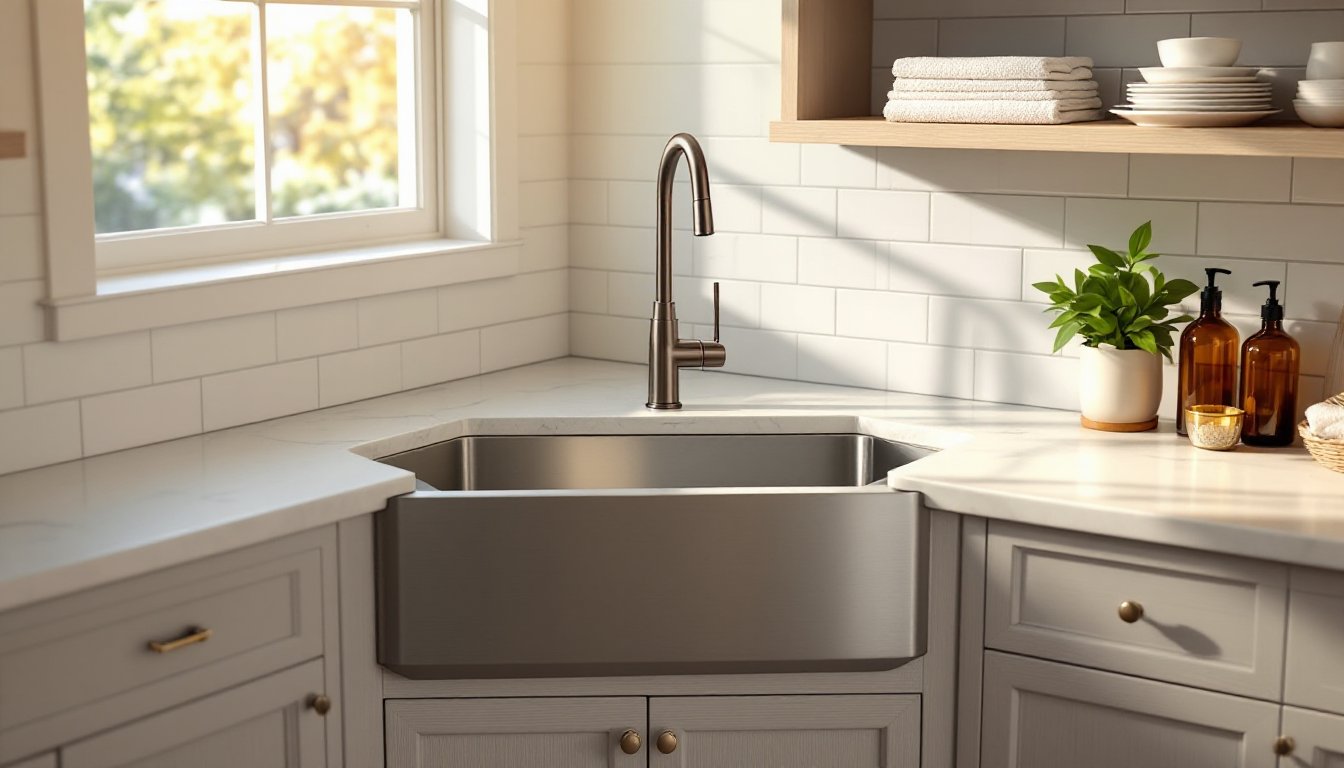
Stainless steel dominates corner kitchen sinks because it’s durable, affordable, and blends with most appliances. A 18-gauge stainless steel sink (thicker than 20-gauge) resists denting and lasts 15+ years with minimal staining if you dry it after use. The trade-off: fingerprints show easily, and cheaper grades can pit if exposed to chlorine-heavy water or certain acidic foods.
Composite and quartz sinks have gained momentum since 2022. They’re non-porous, resist scratches and heat, and hide water spots. Composite sinks (acrylic mixed with crushed stone) run $400–$800: quartz versions go higher but age beautifully and feel warm underhand compared to cold steel.
Ceramic or cast iron sinks bring vintage appeal but demand gentler care. Chipped enamel exposes cast iron to rust: ceramic can crack if you drop a heavy pot. These work best in kitchens where aesthetics trump durability or in second homes with lighter use.
For finishes, brushed or matte stainless steel masks water spots better than polished finishes. If you choose shiny finishes, budget for a microfiber cloth and drying routine or accept some visible residue. Darker composite sinks hide debris better than light finishes, but they also show dust and require the same drying discipline. Consult the manufacturer’s care guide, a $600 sink is a sunk cost if you treat it wrong.
Faucet Selection and Installation Tips
Faucet height becomes critical in corner sinks because the spout must clear the sink’s back lip and avoid striking the wall or cabinet side. A high-arc faucet (8–12 inches tall from base to spout) works well in most corners: measure from the rim of your sink to the lowest point on the wall behind it before you buy. If your corner is tight, a gooseneck or pull-down faucet (with a hose that retracts) gives you more flexibility and fits snugly without overhang.
Single-handle faucets suit corners better than two-handle models because they take up less horizontal space and operate with one hand, useful when you’re gripping a slippery pot in the other. If plumbing allows, wall-mounted faucets eliminate counter footprint entirely, though installation requires drilling into the wall stud and running supply lines through the cavity. This is a job for a plumber unless you have solid experience with PEX or copper soldering.
Installation requires sealing the faucet base with silicone caulk (not old-style putty, which hardens and cracks) to prevent water from pooling underneath and rotting the cabinet. Apply a continuous bead, not dabs: wipe excess with a wet finger before it sets. Use food-grade silicone if you’re installing in an area where water might splash back toward food prep.
If your corner faucet has a sprayer hose, route it carefully around the drain to avoid kinks and ensure the valve closes fully when you release the trigger. A slow-closing hose indicates sediment buildup in the aerator, unscrew the tip and rinse debris under running water annually.
Design Trends and Style Inspiration for 2026
Modern corner sink designs balance minimalism with warmth. Matte black or charcoal stainless steel pairs beautifully with light wood cabinets and marble backsplashes, creating contrast without harsh industrial feel. Many designers are also specifying waterfall edges on adjacent counters, where the countertop material runs down the corner cabinet like a waterfall, uniting the visual space.
Open shelving next to a corner sink has become popular for a reason: it keeps dish soap and hand towels visible and accessible while adding breathing room in tight kitchens. If you go this route, mount shelves on the perpendicular wall (the one your sink faces) rather than above it: overhead shelves cast shadows and feel cramped.
For design inspiration, sites like Houzz’s corner sink gallery showcase professional installations across different styles, from Scandinavian minimalism to farmhouse charm. The Kitchn offers practical small-kitchen solutions that often feature corner sink layouts with real homeowner context. If you’re leaning toward a full remodel, Remodelista curates kitchen design sourcebooks and product guides that help you source quality fixtures.
Color trends for 2026 lean toward warm metallics, bronze faucets and aged brass accents soften the coolness of stainless steel. If your backsplash is bold (patterned tile, for example), let the sink finish be neutral so it doesn’t visually compete.
Conclusion
A well-designed corner kitchen sink balances function, durability, and style. Start by confirming your cabinet space and plumbing access, choose materials that fit your maintenance habits, and select a faucet scaled to your corner’s geometry. With thoughtful planning, your corner sink becomes a design anchor that makes daily kitchen work smoother and your space feel intentionally used.