A black and white bedroom doesn’t have to feel cold or sterile. When done right, this classic palette creates a sophisticated, calming retreat that never goes out of style. Whether you’re renovating from scratch or refreshing your current space, black and white bedroom design offers flexibility, it pairs well with natural wood, metallics, textures, and accent colors. The beauty lies in the balance: use these two anchors to build depth and visual interest without the risk of clashing hues. This guide walks through the practical steps to create a black and white bedroom that’s both timeless and genuinely livable.
Table of Contents
ToggleKey Takeaways
- Black and white bedroom design creates a sophisticated, timeless retreat by balancing these two colors in a 60-30-10 ratio, with white dominant and black used for accents and focal points.
- The black and white palette offers psychological benefits—white expands spaces while black anchors rooms—making bedrooms feel calming and visually balanced rather than cold or sterile.
- Layering textures like linen, wool, jute, and faux fur is essential to prevent sensory fatigue and add depth to a black and white bedroom design.
- Strategic furniture placement, with the bed as a focal point framed by lighting, and a simplified selection of 5-7 major pieces, prevents clutter from dominating the clean palette.
- Warm paint finishes (ivory, cream, charcoal, slate) paired with quality satin or eggshell finishes work better than pure black and white, creating livable elegance without harshness.
- Lighting with warm color temperature (3000K) and dimmers, plus carefully placed accessories like throw pillows and plants, add sophistication and prevent the space from feeling minimalist or sparse.
Why Black and White Works for Modern Bedrooms
Black and white is fundamentally a high-contrast palette that reads as clean and intentional. Unlike trendy colors that date quickly, this combination has worked for decades, and continues to do so because it’s rooted in design principle, not fashion whim.
This palette offers psychological benefits too. White reflects light and feels spacious: black anchors a room and prevents it from feeling washed out. Together, they create visual drama without sensory overload, important in a bedroom where you spend 7-8 hours unwinding and sleeping. A room done in charcoal and cream, for instance, feels sophisticated rather than stark.
The scheme is also forgiving. If you tire of an accent color later, swapping in a new shade (say, mustard instead of teal) works seamlessly against a black and white foundation. This makes the palette ideal for renters and anyone hesitant about long-term commitment. You’re not painting walls or replacing furniture, just rotating textiles and accessories.
Essential Design Principles for Balance
The biggest mistake with black and white is 50/50 split. Equal amounts of each feel clinical and cold. Instead, choose a dominant color, usually white for walls and larger surfaces, and use black for accent walls, furniture, or statement pieces. A typical ratio works out to 60% white, 30% black, and 10% texture or secondary accent.
White doesn’t mean pure white (#ffffff). Opt for warm whites like ivory, cream, or off-white for bedrooms: they’re less harsh than sterile bright white. Blacks also vary, charcoal, slate, and deep navy read as “black” but feel warmer and more livable than pure black. These subtle shifts are what separate an elegant bedroom from an uncomfortable one.
Pattern and texture are non-negotiable. Flat, smooth surfaces in only black and white create sensory fatigue. Introduce a geometric throw blanket, woven jute rug, or wallpaper with texture. Linen, cotton, wool, and faux fur all add dimension and invite touch, critical in a personal sleeping space. When you layer different textures, the eye reads the room as layered and intentional, not minimalist or sparse.
Furniture Selection and Layout
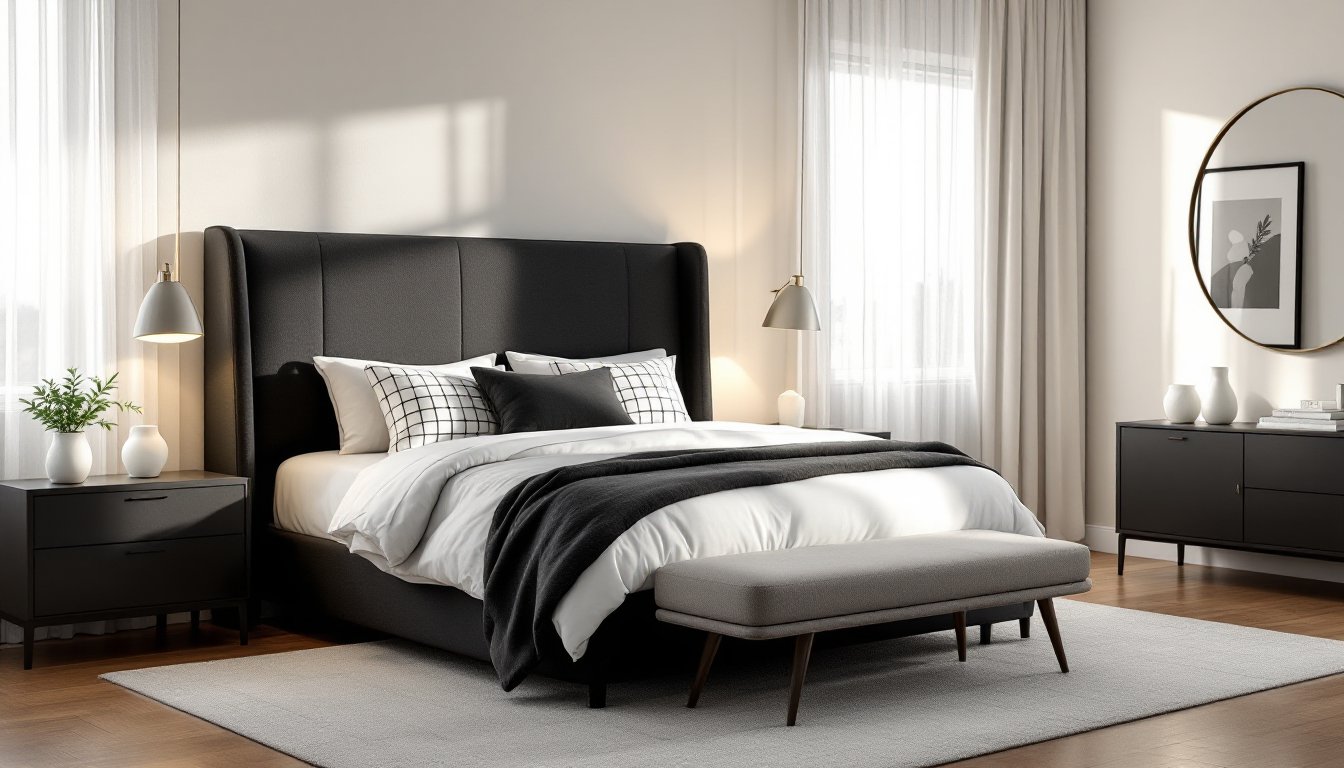
Your bed is the focal point: make it count. A black upholstered headboard against white walls creates immediate impact without overwhelming the space. Alternatively, a white or cream bed frame paired with black nightstands and a black accent wall works equally well. The key is choosing one bold statement, not two.
For other furniture, keep it simple and functional. A white dresser, nightstands in natural wood or black, and a low bench at the foot of the bed maintain visual calm. Avoid too many pieces: the black and white palette shows clutter faster than busier color schemes. Aim for five to seven major furniture items in a standard bedroom.
Layout matters more than you’d think. Interior design inspiration from sources like Homedit and House Beautiful shows that successful black and white bedrooms often float the bed away from the wall (if space allows) and use nightstands and lighting to frame it as a focal point. A bedside table lamp with a white or black shade grounds the setup. If you’re working with a tight floor plan, push the bed against the wall but use the headboard and bedding to define it as the room’s anchor.
Wall and Flooring Options
Paint is the fastest, most affordable way to establish black and white. A white ceiling (always white, it bounces light and makes rooms feel taller) paired with white or cream walls allows flexibility for accent walls. A single black or deep charcoal wall, typically behind the bed or opposite the entry, draws the eye and adds depth without cramping the space.
Wallpaper works too. Geometric patterns (stripes, chevron, or abstract designs) in black on white or white on black add visual interest without overwhelming. Keep pattern to one accent wall: otherwise, the room feels busy. Test samples in your space at different times of day: artificial light changes how pattern reads.
Flooring can be either element. Light wood (oak, maple) or light gray laminate pairs beautifully with black and white and adds warmth. A dark stained floor (espresso, walnut) creates drama and grounds the space. Avoid pure black flooring, it shows dust and feels heavy underfoot. For rugs, a large white or light gray area rug anchors the seating area: layer a black or patterned rug over it for depth. Natural materials like jute or sisal add texture without competing for visual attention.
Lighting and Accessories for Dramatic Impact
Lighting sets mood in a black and white bedroom. Overhead ceiling fixtures should emit warm white light (3000K color temperature): harsh cool white (5000K+) feels institutional. Bedside lamps with black or white shades, a wall sconce pair flanking the bed, or a simple pendant light all work. Dimmers are essential, they let you adjust from bright task light (getting dressed, reading) to soft ambient light (winding down).
Accessories tie everything together. Throw pillows in varying black and white patterns, solid, geometric, striped, layered on the bed add dimension and comfort. A textured throw blanket draped over the foot or side of the bed invites touch and breaks up flat surfaces. Wall art, prints, framed photographs, or a gallery wall in black and white, reinforces the theme without adding color clutter.
Small touches matter: a black mirror with a white matte frame, white or black ceramic nightstand organizers, or metallic accents (gold or brushed nickel hardware) add sophistication. Modern design sources like Design Milk highlight how contemporary bedrooms often layer metallics and geometric accessories to avoid a sterile feel. Plants with dark green foliage in white or neutral pots introduce organic softness while staying within the palette.
Practical Tips for Making the Scheme Work
Start with the biggest surfaces: walls and flooring. These set your palette and are hardest to change. Paint a test wall and live with it for a week under different lighting before committing. If adding an accent wall, use painter’s tape and a quality brush or roller, a messy line ruins the effect.
Invest in good white and black paint finishes. Flat finishes hide imperfections but collect dust: semi-gloss is easier to clean but shows every brush stroke. Eggshell or satin is the sweet spot for bedrooms, subtle sheen, easy to wipe clean. For accent walls, one quality coat of high-coverage paint usually suffices: for white walls, you may need two coats depending on the color underneath.
When shopping for furniture and textiles, buy samples or use a returns policy. Black and white vary by fabric, finish, and lighting: a “white” bedspread under bedroom lighting might look cream or yellow compared to your paint. Bring paint chips to the store. Measure twice, furniture that looks proportional in a showroom can overwhelm a modest bedroom. Leave white or breathing room around dark furniture to prevent the space from feeling heavy. Finally, black and white bedrooms require regular tidying: clutter reads faster against clean contrast. Simple storage solutions, a low bench with hidden compartments, floating shelves, or under-bed storage, keep the space visually calm.
Conclusion
Black and white bedroom design is fundamentally about balance and restraint. It’s not about sterility: it’s about intentionality. By anchoring the space in one dominant color, layering texture, and using strategic accent pieces, you create a bedroom that’s both timeless and deeply personal. Start with a clear plan, sketch your layout, pick your paint colors, and gather reference images, then build from the largest surfaces outward. The result is a sophisticated, restful retreat you’ll love for years.