A great deck doesn’t require complex architectural flourishes or endless custom details, it just needs good bones and smart choices. Whether you’re adding 8×10 feet of space for evening coffee or creating a 16×20 entertaining platform, the best deck designs start simple, stick to proven layouts, and let materials and finishes do the visual heavy lifting. This guide walks you through straightforward decisions that transform a basic footprint into an outdoor space that feels intentional and inviting, without requiring a contractor’s toolbox or months of planning.
Table of Contents
ToggleKey Takeaways
- Simple deck design succeeds by focusing on solid construction, honest materials, and logical layouts rather than complex architectural details or trendy features.
- Choose one material for the walking surface—either pressure-treated lumber, cedar, redwood, or composite decking—and pair it with pressure-treated framing to avoid visual confusion and maintenance headaches.
- Standard joist spacing of 16 inches on center and rational deck footprints like 8×12 or 10×14 feet balance cost, durability, and visual appeal without oversizing.
- A cohesive neutral color palette (warm grays, soft browns, charcoal) and consistent finish type make a simple deck look intentional while hiding dirt and simplifying future maintenance.
- Built-in benches, simple vertical railings, and understated shade solutions like pergolas add function without clutter; save elaborate features like recessed lighting for later once you understand how you actually use the space.
Understanding Deck Basics and Your Design Goals
Before picking railings or stain colors, nail down what your deck actually needs to do. Is it a quiet retreat attached to a bedroom, a hub for entertaining a crowd, or a transition space between house and yard? That single question shapes everything, post spacing, surface area, whether you need built-in seating, and how much shade matters.
Start by measuring your intended footprint and noting the existing grade (ground level). A deck at or near grade, say 12 inches off the ground, is cheaper and simpler than an elevated platform, but it requires better drainage and may need extra ventilation underneath. Decks higher than 24 inches off the ground trigger different code requirements for railings, stairs, and structural support. Check your local building department about permit thresholds: many jurisdictions require permits for decks over 200 square feet or more than 30 inches high.
Sketch a rough footprint on paper or take a phone photo of your yard with dimensions labeled. Don’t overthink aesthetics yet, focus on square footage, sun exposure, and how foot traffic will flow from your door to the yard. That foundation prevents costly mid-project pivots.
Choosing Materials That Balance Durability and Simplicity
Three material categories dominate simple deck builds: pressure-treated lumber, cedar or redwood, and composite decking. Each has trade-offs in cost, maintenance, and lifespan.
Pressure-treated lumber (typically southern yellow pine rated for ground contact) is the most affordable and works well for framing and joists. It resists rot in wet conditions, though the greenish tint fades to gray unless sealed. It’s also heavy to handle solo, nominal 2×8 joists are about 11 pounds per foot.
Cedar and redwood offer natural beauty and lighter weight but need regular sealing (every 1–2 years) to prevent graying and rot. They cost 2–3 times more than pressure-treated but appeal if you want visible grain and warm tones.
Composite decking (wood fibers bound with plastic resin) requires minimal maintenance, resists fading, and comes in neutral grays, browns, and taupes. It’s pricier upfront but saves money on stain and sealers over 15+ years. Many composites also resist splinters, which matters for bare feet.
For a simple deck, choose one material for the deck surface and pressure-treated lumber for hidden framing (joists, bands, posts). Mixing materials on the walking surface creates visual confusion and maintenance headaches. If budget allows, composite decking paired with a pressure-treated substructure offers the easiest long-term care.
Layout and Space Planning for Maximum Impact
Simple decks work best as square or rectangular platforms. Odd angles and curves look trendy in magazine photos but chew up material, complicate framing, and demand precise miter cuts, especially if you’re new to deck building.
Standard joist spacing is 16 inches on center (measuring from the center of one joist to the center of the next), which balances deflection and material cost. This translates to joists at 0, 16, 32, 48 inches, and so on. A 12-foot-wide deck typically needs four joists: a 16-foot deck might need five. Your local code specifies maximum joist span based on lumber size and species: a 2×8 pressure-treated joist typically spans 12–14 feet depending on load assumptions.
Posts should be spaced no more than 8 feet apart along the band beam and sit on concrete footings below the frost line (depth varies by region, check your local code). Undersizing posts or spacing them too far is a common shortcut that leads to bounce or sag.
Keep the deck footprint rational. An 8×12 or 10×14 deck feels complete for small yards: a 12×16 works well for larger properties. Oversizing adds cost and visual awkwardness, a 20×20 platform in a small yard looks like a helicopter landing pad. If you need more space later, building a second small deck or adding a pergola is simpler than redesigning the original.
Color Palettes and Finishes That Create Visual Interest
The fastest way to make a simple deck look intentional is choosing a cohesive color and committing to it. Neutral tones, warm grays, soft browns, and charcoal, work with almost any house and yard and hide dirt better than light finishes.
If you choose pressure-treated lumber, plan to seal it within a few months of installation (the wood needs to dry first). A clear sealer preserves the grain and natural color slightly longer. Semi-transparent stains add warm or cool undertones without fully obscuring grain: solid stains hide the wood surface entirely and hide weathering better. Cedar takes on a silvery patina over time if left unsealed: many homeowners like this look, but it requires accepting the gray tone.
Composite decking comes pre-colored and doesn’t need sealing, but lighter hues (ivory, light gray) show dirt and footprints more readily. Darker composites are forgiving and pair well with neutral house trim.
Don’t mix stain types on the same deck surface, matte and glossy finishes, or clear sealer beside solid stain, create visual patchiness and complicates future touch-ups. Brush on thin, even coats and plan for resealing every 2–3 years if using pressure-treated wood or cedar. This prevents cupping (board edges curling up) and extends deck life significantly.
Essential Features Without Added Complexity
Seating and Functional Elements
Built-in benches and planters add function without cluttering the deck. A simple bench running along one side, 32 inches wide, 18 inches deep, anchors the space and gives guests somewhere to sit without dragging furniture around.
Hand-built planter boxes from pressure-treated 2×8 boards (lined with landscape fabric to prevent rot) break up open deck space and define zones. Keep planters to a few clusters rather than scattering them: plants in groups look intentional.
Railings must meet code (typically 36 inches high with balusters spaced no more than 4 inches apart to prevent a sphere from passing through, a child safety measure). Simple vertical balusters (2×2 posts) are easier to install than diagonal or lattice patterns and won’t trap leaves and debris.
Skip elaborate features like recessed lighting, built-in grills, or hidden storage until you’ve lived with the basic deck for a season. These upgrades are simpler to add later than to remove if they don’t work. A simple deck nails the fundamentals: amenities follow once you understand how you actually use the space.
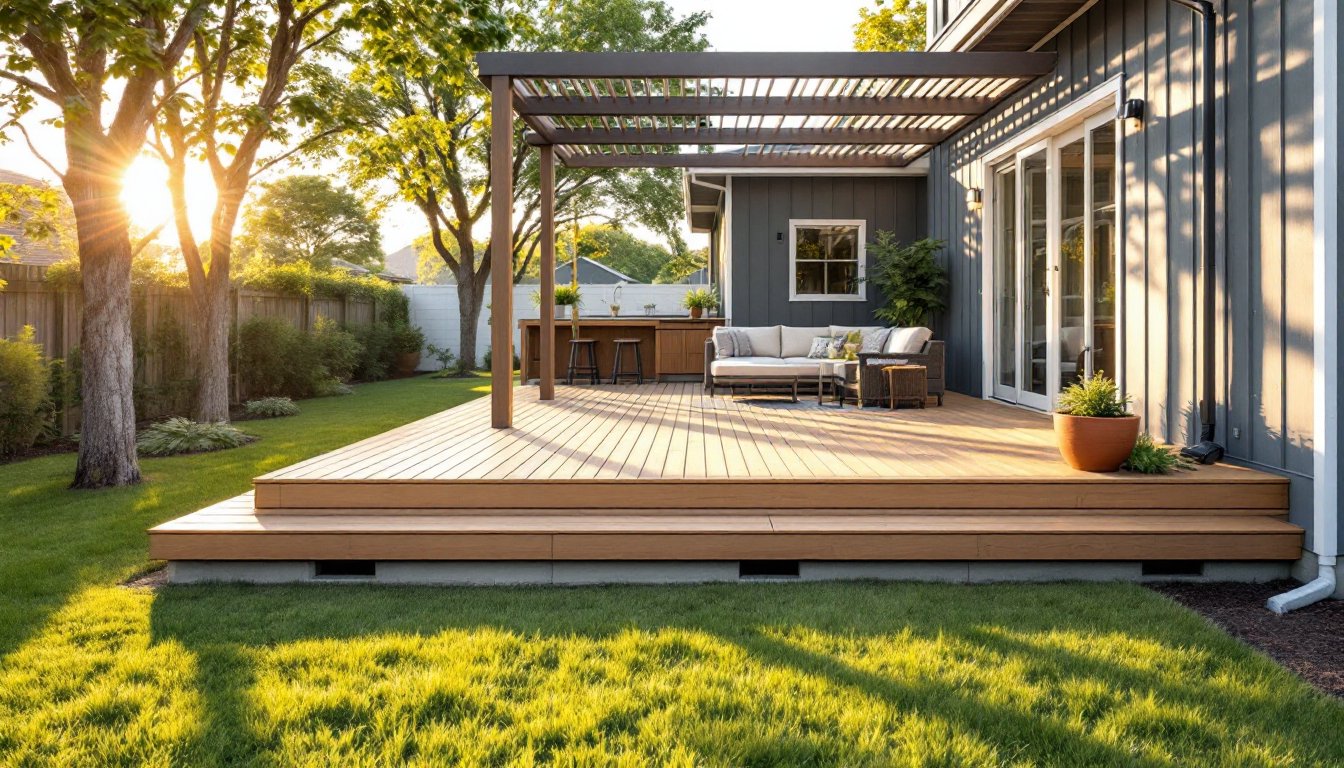
Consider shade if your deck faces afternoon sun. A pergola (a post-and-beam structure with open overhead slats, not full coverage) adds visual interest without the cost of a roof and works well alongside designing a small but elegant deck strategies. Alternatively, a market umbrella stored in an outdoor stand covers seating without permanent installation.
Conclusion
A simple deck succeeds because it focuses on solid construction, honest materials, and layouts that flow naturally from your house to your yard. Skip the trendy bells and whistles, railings that look good, finishes that age gracefully, and space sized to your actual use are what make a deck feel like home. Measure twice, plan once, and you’ll build an outdoor room that lasts decades and never feels overcomplicated.