A beautiful deck doesn’t end at the boards and railings, the landscape design surrounding and adorning it transforms the whole space into a true outdoor living area. Thoughtful deck landscape design combines hardscaping, plant placement, and spatial planning to create a cohesive extension of your home. Whether you’re starting fresh or refreshing an existing deck, this guide walks you through the essentials: understanding the basics, planning your layout, selecting plants, and adding finishing hardscape touches. You’ll learn how to assess your site, work within your climate and sunlight conditions, and make practical choices that balance aesthetics with durability.
Table of Contents
ToggleKey Takeaways
- Effective deck landscape design combines hardscaping, plant placement, and spatial planning to create an integrated outdoor living area that enhances both aesthetics and functionality.
- Assess sun exposure, drainage, and wind patterns before selecting plants—spend a full day observing your deck to identify areas with full sun (6+ hours), partial sun (3–6 hours), and shade.
- Container gardening offers flexibility for deck landscapes; choose pots at least 12–18 inches deep with drainage holes and use quality potting mix rather than garden soil.
- Native plants adapted to your hardiness zone and climate conditions require less maintenance and are more likely to thrive in container gardens on your deck.
- Hardscape elements like pathways, edging, and raised beds define the structure and functionality of your deck space while guiding movement and reducing maintenance demands.
- Plan for year-round visual interest by layering plant heights, selecting perennials and seasonal annuals, and incorporating lighting to extend usability into evening hours.
Understanding Deck Landscape Design Basics
Deck landscape design is the strategic arrangement of plants, pathways, and visual elements around and on your deck to create an integrated outdoor space. It’s not about stuffing every corner with ornaments or plants: it’s about intentional placement that enhances usability and beauty.
Start by thinking of your deck as part of a larger ecosystem. The deck itself is the hardscape foundation, but soil health, drainage, sun exposure, and seasonal changes all affect what will thrive nearby. Unlike traditional in-ground gardening, deck landscapes often rely heavily on container plantings and vertical elements, especially if your deck sits on a slope or over a patio.
Key considerations include:
• Sightlines and focal points: What do you see when you step onto the deck? When you look out from inside your house? Place plantings and features to draw the eye naturally.
• Foot traffic flow: Pathways and plant placement should guide movement without forcing awkward routes.
• Year-round interest: Plan for plantings and hardscape features that look good in every season, not just summer.
• Maintenance reality: Be honest about how much time you’ll spend pruning, watering, and upkeeping plants and features.
Planning Your Deck Landscape Layout
A solid plan saves money, time, and regret down the road. Sketch out your deck area to scale, marking existing features like stairs, railings, and utilities (gas lines, electrical, irrigation). Note which direction is north, this determines sun patterns throughout the day.
Think about traffic patterns and zones. A deck used primarily for entertaining needs different layout logic than one designed as a quiet reading retreat. Consider sight lines from inside the house, neighboring properties, and key gathering spots.
Start with rough zones: a seating area, a transition zone with plantings, and perhaps a dining or functional area. Leave breathing room: cramming plants and features creates a cluttered feel and makes maintenance harder.
Assessing Space And Sunlight
Sun exposure is non-negotiable for plant selection and deck usage. Spend a full day observing your deck at morning, midday, and evening. Mark areas that get full sun (6+ hours direct), partial sun (3–6 hours), and shade (under 3 hours).
Note that sun patterns shift with seasons. Winter sun angles differ significantly from summer, so an area that’s shaded in June might be sunny in January. Trees, nearby structures, and even your own house create shadows that expand or shrink.
Also assess wind exposure. Decks, especially elevated ones, can be windier than ground-level gardens. Strong winds stress plants, accelerate soil moisture loss, and make sitting uncomfortable. Taller plantings or lattice screens can buffer wind without blocking views entirely.
Drainage is equally critical. Water should flow away from the deck structure, not toward it. Poor drainage leads to rot, mold, and failed plant roots. If your site has low spots that collect water, address them with grading or French drains before designing landscape features.
Choosing Plants And Greenery For Your Deck
Container gardens and strategic plantings are the backbone of deck landscaping. Since deck plantings sit in pots or raised beds rather than in-ground soil, they’re easier to adjust, replace, and customize each season.
Select plants that match your light and climate conditions. Native plants are a smart choice, they’re adapted to your region’s rainfall, temperature swings, and pest pressures. Check your hardiness zone (via the USDA Plant Hardiness Zone Map) and choose species rated for your area. Perennials return year after year, while annuals give you flexibility to change colors and styles each season.
For decks with limited root depth, dwarf or compact varieties work better than sprawling, deep-rooted plants. Ornamental grasses, sedums, and shrubs bred for small spaces fit naturally on or beside decks. Avoid trees with aggressive roots (like willows or silver maples) that can damage deck framing.
Layering heights creates visual interest and screens undesirable views. Place tall shrubs or small ornamental trees in back, mid-height plantings in the middle zone, and low groundcovers or trailing plants at the front. This tiered approach makes the space feel larger and more deliberately designed.
Watering and feeding container plants requires more frequent attention than in-ground gardens. Pots dry out faster, especially in heat or wind. Use quality potting mix (not garden soil, which compacts in containers), and mulch the surface to retain moisture. Plan for irrigation, hand-watering daily during hot months gets old fast. A soaker hose or drip irrigation on a timer saves water, money, and back strain.
Container Garden Options
Container gardening gives you flexibility to place plants exactly where you want them and swap them seasonally. Choose containers at least 12–18 inches deep for most shrubs and perennials: shallow pots limit root development and dry out too quickly.
Material matters:
• Ceramic and terracotta: Heavy, attractive, but brittle. Not ideal for windy decks or areas with freeze-thaw cycles (water inside expands when frozen, cracking the pot).
• Plastic: Lightweight, durable, and affordable. Won’t crack in cold. Downside: less visually interesting, can fade in UV. Choose larger pots to avoid tipping in wind.
• Resin or fiberglass: Strong, lightweight, frost-resistant. More expensive but excellent for decks in harsh climates.
• Wood planter boxes: Rustic appeal, but untreated wood rots. Use pressure-treated or composite lumber, and line the interior with landscape fabric to extend life.
Ensure containers have drainage holes. If you like a pot without drainage, use it as a cache pot (decorative outer pot) and nest a draining pot inside it. Elevation matters too, raise pots slightly on pot feet or risers so water drains freely underneath.
For larger spaces, consider Better Homes & Gardens for seasonal planting ideas and container combinations that work in your zone. A mix of proven resources helps you stay on trend while keeping plants healthy.
Adding Hardscape Elements And Pathways
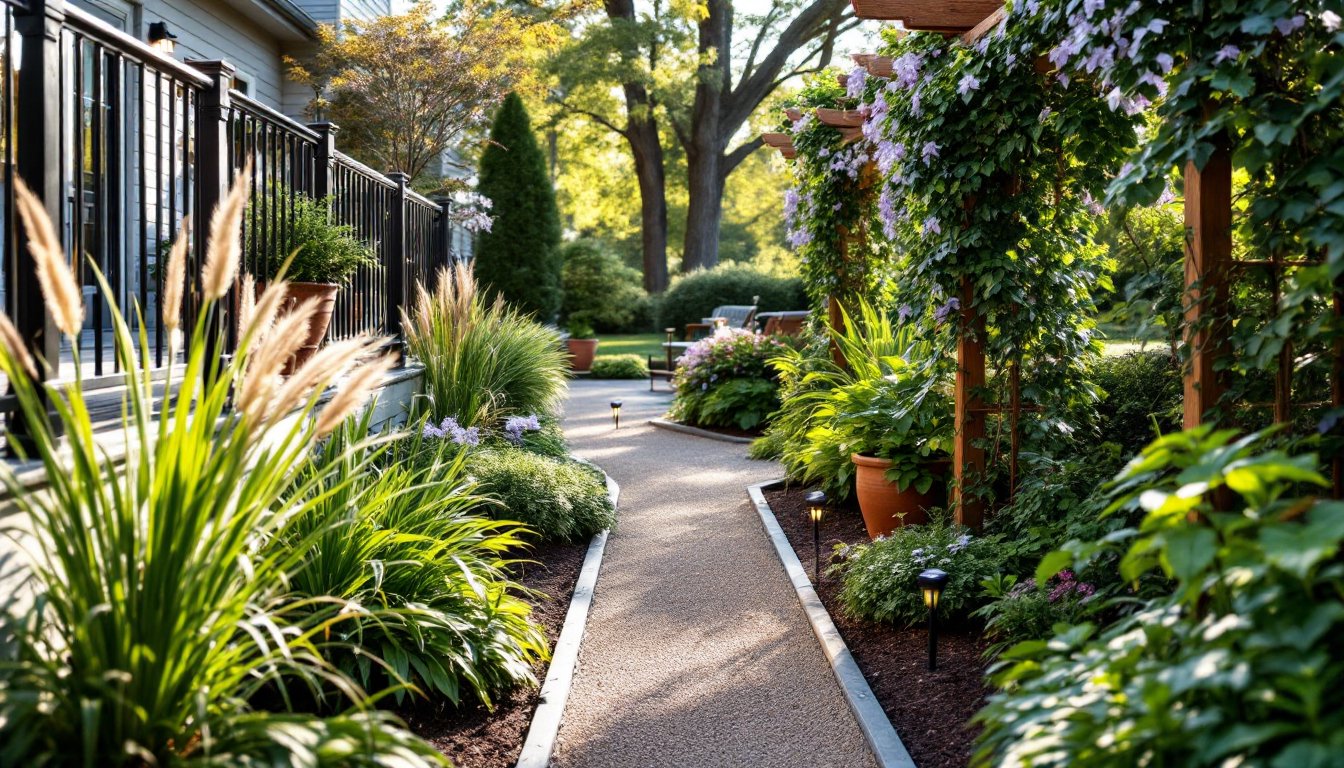
Hardscaping, the non-plant landscape features, defines the structure and functionality of your deck space. Pathways, edging, gravel, and decorative elements tie everything together and guide movement.
Pathways serve practical and visual roles. Even a short walkway from the deck to the yard’s main seating area creates a sense of journey and purpose. Use stepping stones, pavers, or gravel paths between plantings. Ensure pathways are wide enough to walk naturally (at least 2–3 feet) and slope slightly for drainage.
Materials for pathways include:
• Gravel or mulch: Affordable and easy to adjust. Replenish annually as material settles and breaks down. Keep it 3–4 inches deep to suppress weeds.
• Stepping stones: Wood, concrete, or composite pavers spaced 12–18 inches apart. More formal look, better for wet climates.
• Permeable pavers: Plastic or composite grids filled with gravel or mulch. Allows water to drain, reduces runoff.
Edging defines plant beds and prevents gravel or mulch from spreading onto the deck. Steel, composite, or stone edging keeps lines clean and maintenance lower. Avoid plastic edging, it degrades in sun and looks cheap after a year.
Consider vertical elements like trellises, arbors, or raised planters. An arbor over the deck creates shade and visual height without taking up ground footprint. Raised beds (12–24 inches high) make planting and weeding easier, improve drainage, and define zones clearly. A comprehensive guide to hardscaping and wood decks details construction and material selection if you’re tackling raised beds or structural elements yourself.
Lighting elevates both function and ambiance. String lights, path lights, or spotlights on plantings extend usability into evening and add dimension to the space. Solar options eliminate wiring headaches, though they’re less bright than hardwired LED systems. Plan wire runs before finalizing hardscape layout so you can bury or conceal cables.
Finally, ground-level prep is essential. Clear away debris, level the base, and remove weeds before laying pathways or mulch. Use landscape fabric under gravel or mulch to reduce weed pressure significantly. Proper prep makes the finished landscape look intentional and last longer without constant maintenance.
Conclusion
A thoughtful deck landscape design transforms your outdoor space from a bare platform into an inviting extension of your home. By assessing sunlight and space, choosing plants suited to your climate and conditions, and layering hardscape elements with intention, you create a landscape that’s both beautiful and manageable. Start with a simple sketch, prioritize drainage and surface prep, and build in phases if budget is tight. Your deck will become the outdoor living space you’ve imagined, one that draws you outside and makes neighbors jealous.